Hello humans!
Today I’d like to tell you about the titles of works of art. Have you ever wondered why we give our artworks titles? Or do we do the complete opposite and refuse to give them titles at all?
In this blog:
- Why do we even need titles?
- The history of titling works
- What’s it all for?
- Titles that changed history
- So why “Untitled”?
- A bridge between souls
Why do we even need titles?
Art is not an easy concept, either for artists or for viewers. Sometimes splashes of color, blobs, lines, ellipses, or unexpected framings make understanding a work extremely difficult. That’s when the little plaque next to it comes to the rescue, with a title that sometimes explains what you see in the painting, and other times merely subtly suggests which direction to think, interpret, and comprehend.
The history of titling works
For most of art history, artists didn’t give their works titles in the way we understand them today. In the Middle Ages or the Renaissance, a painting was primarily an object of worship or an element of interior decoration. What we now consider a title was often a dry inventory description, created by art dealers, collectors, or chroniclers for the purpose of cataloging property.
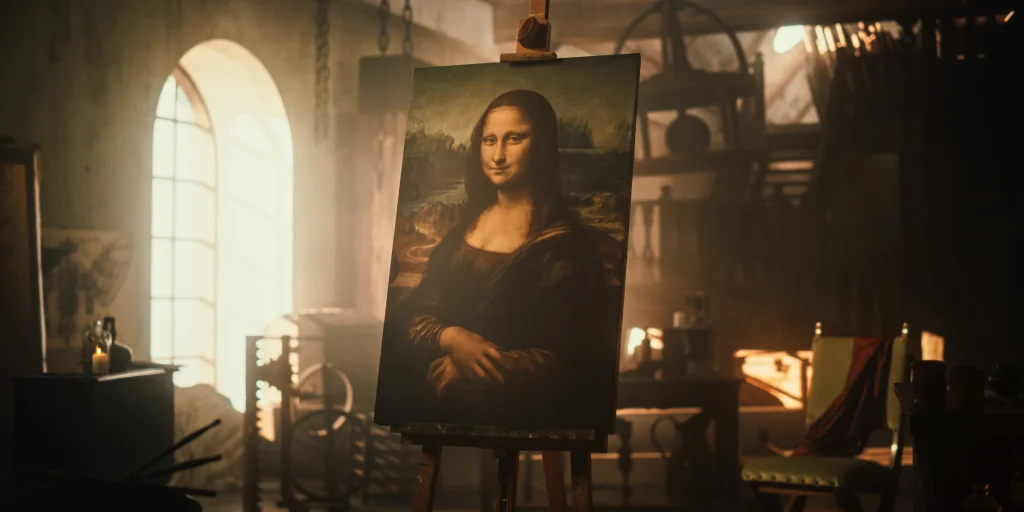
Take, for example, the portrait of Lisa Gherardini, wife of a Florentine merchant (though without getting into deeper debates on this topic, for the sake of the example, let’s assume that’s correct, but to be fair some interpreations suggest that it’s not her afterall). Leonardo da Vinci didn’t call it Mona Lisa . That’s a nickname that only became established several decades after his death thanks to the biographer Giorgio Vasari (“Mona” is a contraction of “Madonna,” meaning “My Lady”) . Earlier, the painting was known as “Portrait of a Certain Florentine Lady” . Similarly, Lady with an Ermine – it wasn’t Leonardo who came up with this poetic name, but later art historians describing “what they saw.”
For centuries, descriptive, often very long titles dominated: “Landscape with a Storm and the Flight into Egypt,” “Still Life with Lemons, Oysters, and a Pewter Jug.” The title was a label, a table of contents for the painting.
The real breakthrough came in the 18th and 19th centuries. It’s no coincidence that this coincided with the birth of public salons, art criticism, and museums. A work of art ceased to be solely a religious object or an aristocrat’s private decoration and became a commodity on the market and the subject of public debate . Suddenly, a painting exhibited at the Salon needed a name in the catalog to distinguish it from hundreds of others, catch the eye, and tell the critic what to write about it . The artist was transforming from a craftsman into an individual wanting to communicate specific ideas. The title evolved here from a label into another tool of artistic interpretation.
What’s it all for?
There are many more reasons for giving titles than you might think.
Identity.
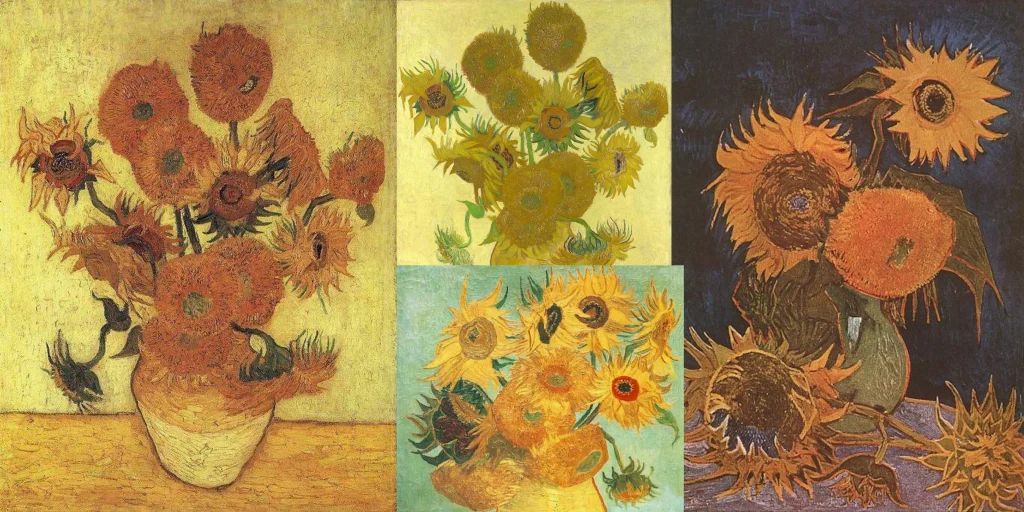
This is the most basic, practical function. The title is the work’s own proper name. When van Gogh’s “Sunflowers” are mentioned, you immediately know which of his famous cycles is being discussed (though in the spirit of artistic duty, I should note that there are as many as 11 versions of van Gogh’s sunflowers, so I’m not referring to a single work here but to the cycle). Without the title, one would probably have to specify the number of flowers, the vase, the table, the colors, the perspective, maybe the year of creation before it became clear which work was being discussed.
An interpretative key.
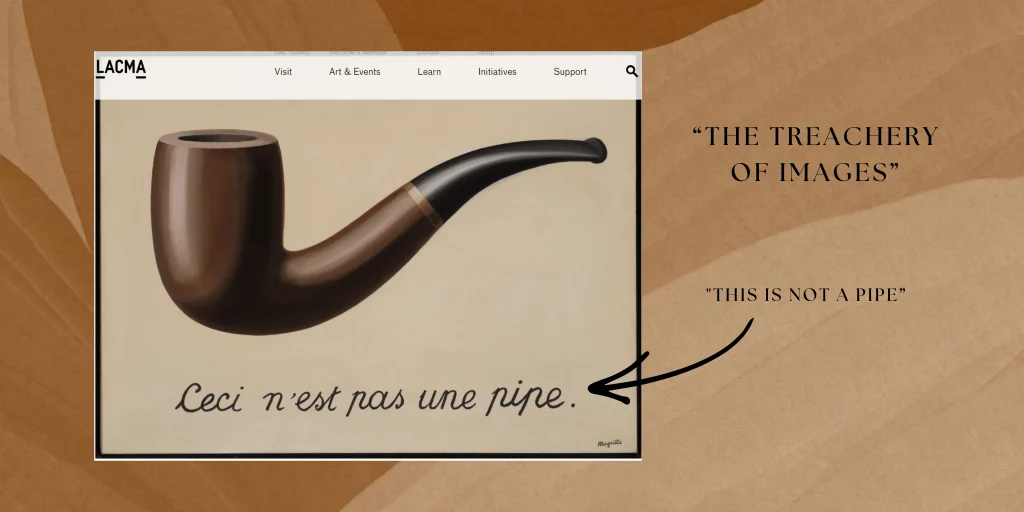
The title doesn’t directly tell you what to think or feel about the artwork. It’s more like a compass created by the artist, which is why it’s so important that the title is well-thought-out and comes from a truly artistic interpretation. For example, the work by René Magritte titled The Treachery of Images contains the inscription “This is not a pipe,” which further emphasizes the situation. This is a great example of both the power and the weight of titles.
From a complement to part of the work.
For many contemporary artists, the title is an integral part of the work, without which it is incomplete. Sometimes it carries information not present in the image: a date, a quote, a fragment of a poem. Other times it works on the principle of ironic counterpoint, creating with the image a kind of intellectual dissonance that stimulates thought. So it is not just a complement, but a part in its own right.
An emotional anchor, the power of understanding.
Humans are narrative creatures who love stories. The title can suggest a whole story behind a frozen moment on canvas in a split second. A work that simply depicts a forest might suddenly, thanks to its title, represent the last day of a village’s life, a loved one’s favorite place, or merely a space from dreams. Without the title, the painting would lose this narrative potential.
Playing with the viewer and provocation.
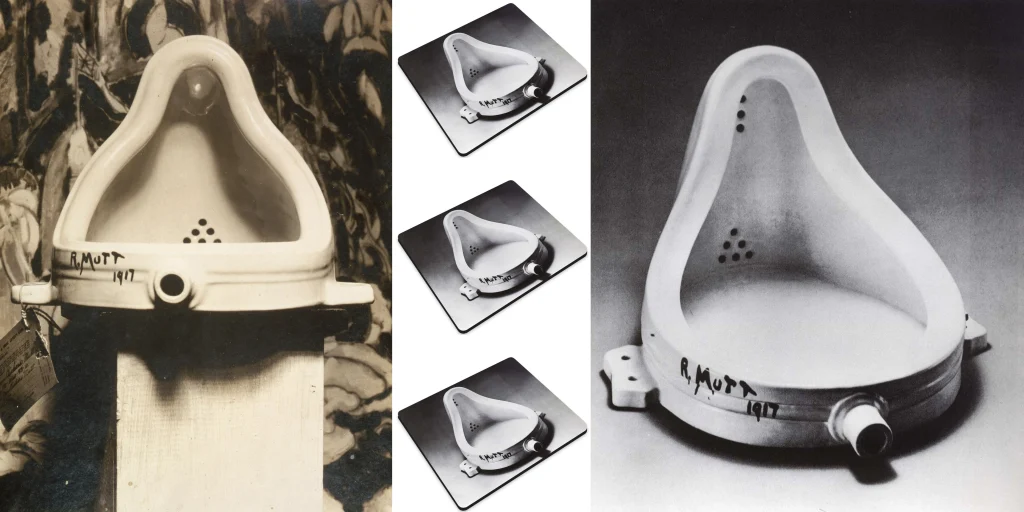
Since the time of the Dadaists and Surrealists, the title has become a field for play, jokes, and provocation. Marcel Duchamp, by signing a urinal “Fountain,” caused a revolution . The object itself was banal, but it was the title, given to a utilitarian object and placed in a gallery context, that made it a milestone in conceptual art and spurred the audience into lively debate .
Homage, quotation, and dialogue with tradition.
Sometimes the title is a nod to another artist or work. A painting might be called “Las Meninas after Picasso,” and we immediately know we are dealing with a work that will be in Picasso’s style.
Titles that changed history
“Impression, Sunrise” (1872) by Claude Monet – the title that accidentally named an era
This is the most spectacular example of the power of a title in art history . Monet painted the view of the port of Le Havre at dawn. When he was about to send the painting to the first exhibition of the Society of Independent Artists in 1874, he was asked for a title for the catalog. He reportedly replied: “Call it ‘Impression'”. Someone from the editorial staff added “Sunrise” for clarity .
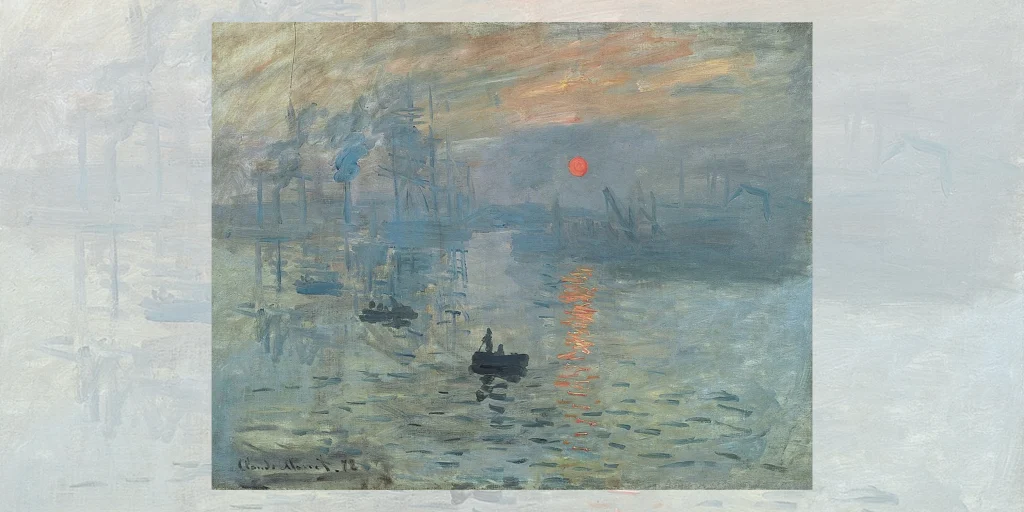
The satirical critic Louis Leroy, wanting to mock the unfinished, “smeared” painting, took this title and coined from it the name of an entire movement – Impressionism . If it weren’t for this one, offhand title, one of the most important movements in art could be called something completely different. The title of a painting became the name of a revolution.
“Fountain” (1917) by Marcel Duchamp – when the title becomes an act of creation (Yes, this is the same fountain mentioned earlier). The object is an ordinary, mass-produced urinal. Placed in a gallery, turned upside down, and signed with the pseudonym “R. Mutt,” it was a shock . But it was the title “Fountain” that was the real genius. It detached this object from its original, trivial function and imposed a new, poetic identity upon it . The urinal is no longer a urinal – it is a fountain, a sculptural object meant to evoke the form and movement of water. This was the ultimate blow to traditional artistic craftsmanship. From this moment on, the idea became the most important thing, and the title became its main vehicle.
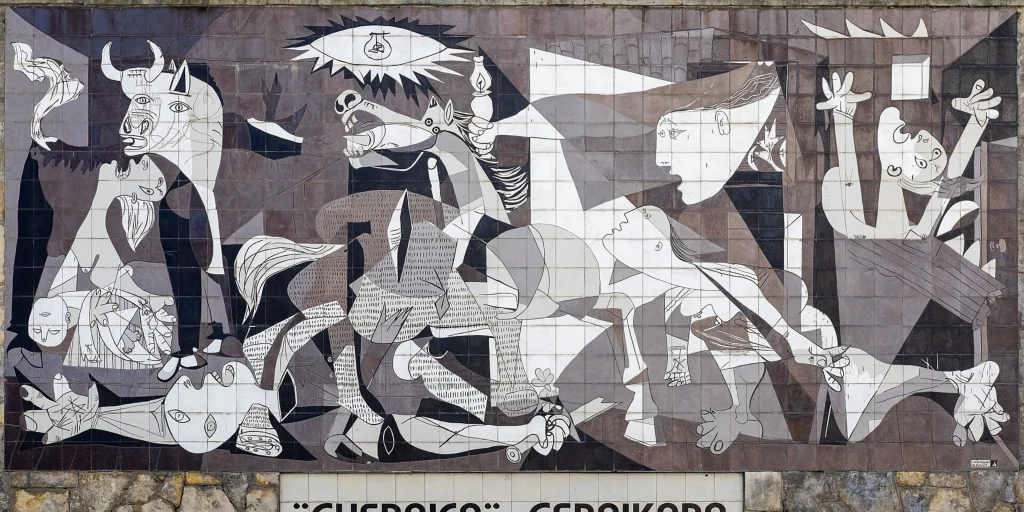
“Guernica” (1937) by Pablo Picasso – the title as an indictment Picasso could have called his monumental painting “Victims of War” or “Tragedy”. He chose one specific word – the name of a Basque town that was razed to the ground by German aircraft on April 26, 1937. This title is like a punch. It allows no universal, safe interpretation. Deeply reminding us of a specific crime, of real people. It makes the abstract language of Cubism real and politically poignant. Guernica is not just a painting – it has been synonymous with the cruelty of total war ever since.
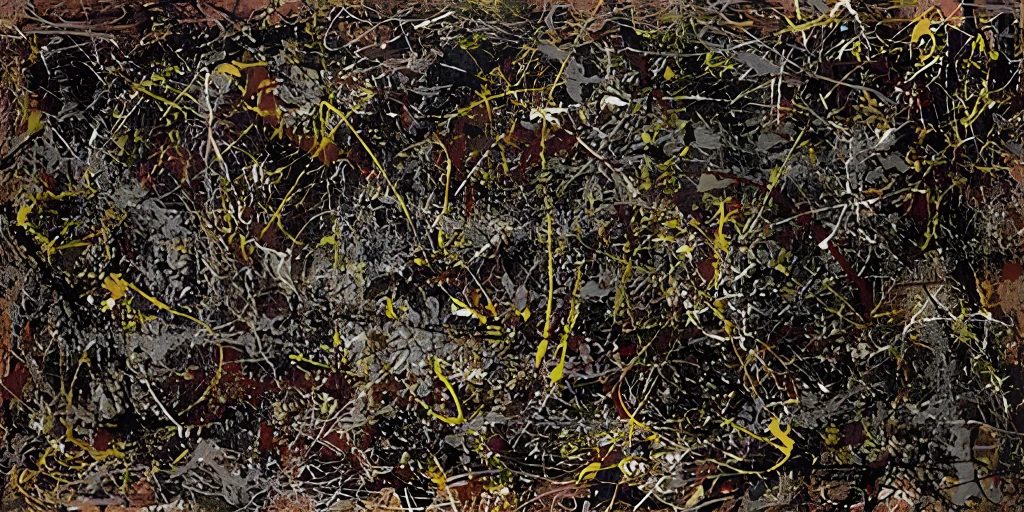
“No. 5, 1948” by Jackson Pollock – the end of the story, the beginning of pure form After the Second World War, the center of the art world moved to New York, and with it, the language of painting changed radically. Abstract Expressionists like Pollock wanted the painting to represent nothing but itself – paint, gesture, emotion captured in form. Narrative titles became unnecessary, even harmful, because they would suggest some meaning beyond the canvas. So Pollock began to number his paintings, like musical compositions. “No. 5, 1948”. This was a push in the complete opposite direction, a refusal to provide context and leaving the viewer to a completely untainted interpretation without any suggestion .
So why “Untitled”?
The paradox is that the decision to leave a work “Untitled” is one of the most significant decisions an artist can make. It is not an absence of a title. It is a title that says: “I don’t want to suggest any interpretation to you. My work is an experience, not a riddle to be solved. It’s you who decides what you notice, what you don’t perceive, and what experiences influence your creativity.”
It’s a choice that puts the viewer at the center. It is an act of trust, but also of risk. Deprived of the first clue, we may feel lost and quickly pass by indifferently. But if we take on the challenge, our contact with the work becomes incredibly intimate and personal. Interestingly, this strategy was used so often by artists of the 20th and 21st centuries that “Untitled” itself has become a convention, almost a separate genre of title .
It is neither good nor bad; not giving a title can be as effective as it can be harmful, which is why it is just as important as the creative process itself.
A bridge between souls
The title is the first and last word in the conversation that the artist begins with the viewer and the world. Over the centuries, it has come a long way: from an inventory label, through a poetic hint, to a philosophical trap and a political manifesto. Sometimes it is like a key, other times like an obstacle.
That is why titling your work of art is equally important and should be a conscious, well-thought-out decision that fits your creativity, vision, and what you want to convey to the world.