
Hello humans,
Today we continue our series on the 7 basic elements of art. In this blog post, we will focus on shape.
We’ll ask what it is, why it matters, how it can be used, and for what purpose.
How can our artworks change under its influence, and why should we pay attention to it?
In this blog:
- What is Shape in Art?
- Why is Shape so important in art?
- History and Evolution of Approaches to Shape
- Exercises to Practice and Understand Shape
- PDF Download
- Fun Facts
- Summary
What is Shape in Art?
Shape is one of the 7 Elements of Art. It is a closed area, defined by lines, changes in color, texture, or value. We can observe it when a line encloses space, or when a change in color/texture creates a clearly visible boundary.
If a line is a trace, a record of movement in space, then a shape is a closed whole.
In art theory, there’s a brilliantly simple definition: Shape is a two-dimensional area (2D) that is distinguished from its surroundings by a closed boundary, change in color, texture, or tonal value.
In other words: it’s “something” on a flat surface that has width and height, but does not yet have depth (which it gains as a form, which I will naturally discuss as one of the basic elements).
To fully understand what a shape is, it’s worth breaking it down into several key characteristics:
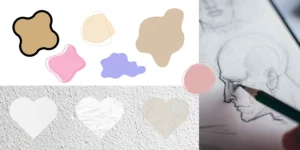
A shape is created in 4 ways:
1. Contour (closed line): You draw the outline and fill it with color.
2. Color Spot (value): You paint a red spot on a yellow background – the difference in colors automatically creates a shape, even without a line.
3. Chiaroscuro: A shape can emerge from darkness solely through the gradation of brightness (e.g., the faces in Caravaggio’s paintings, where the boundary of the shape is soft and blurred).
4. Texture: A change in surface structure (e.g., smooth plaster versus rough sand) also delineates a shape’s area.
Two Main Types of Shapes
Art divides shapes into two opposing categories that affect our psychology:
Geometric Shapes: Circles, squares, triangles, rectangles. They are precise, rational, often associated with mathematics, technology, and order (e.g., Mondrian’s paintings, Le Corbusier’s architecture). They evoke feelings of stability or artificiality.
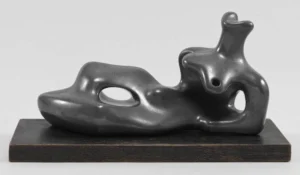
Organic (Biomorphic) Shapes: Non-standard, fluid, wavy, irregular. They imitate natural forms leaves, clouds, animal bodies, spreading inks (e.g., Henry Moore’s sculptures, Kandinsky’s paintings, or Far Eastern ink painting). They evoke feelings of movement, emotion, and life.
Positive and Negative Shape (Key to Composition)
This is one of the most important concepts in art. When looking at an image:
Positive Shape is the main object, i.e., the figure (e.g., a black vase in the center).
Negative Shape is the space around it, i.e., the background (e.g., the white field around the vase).
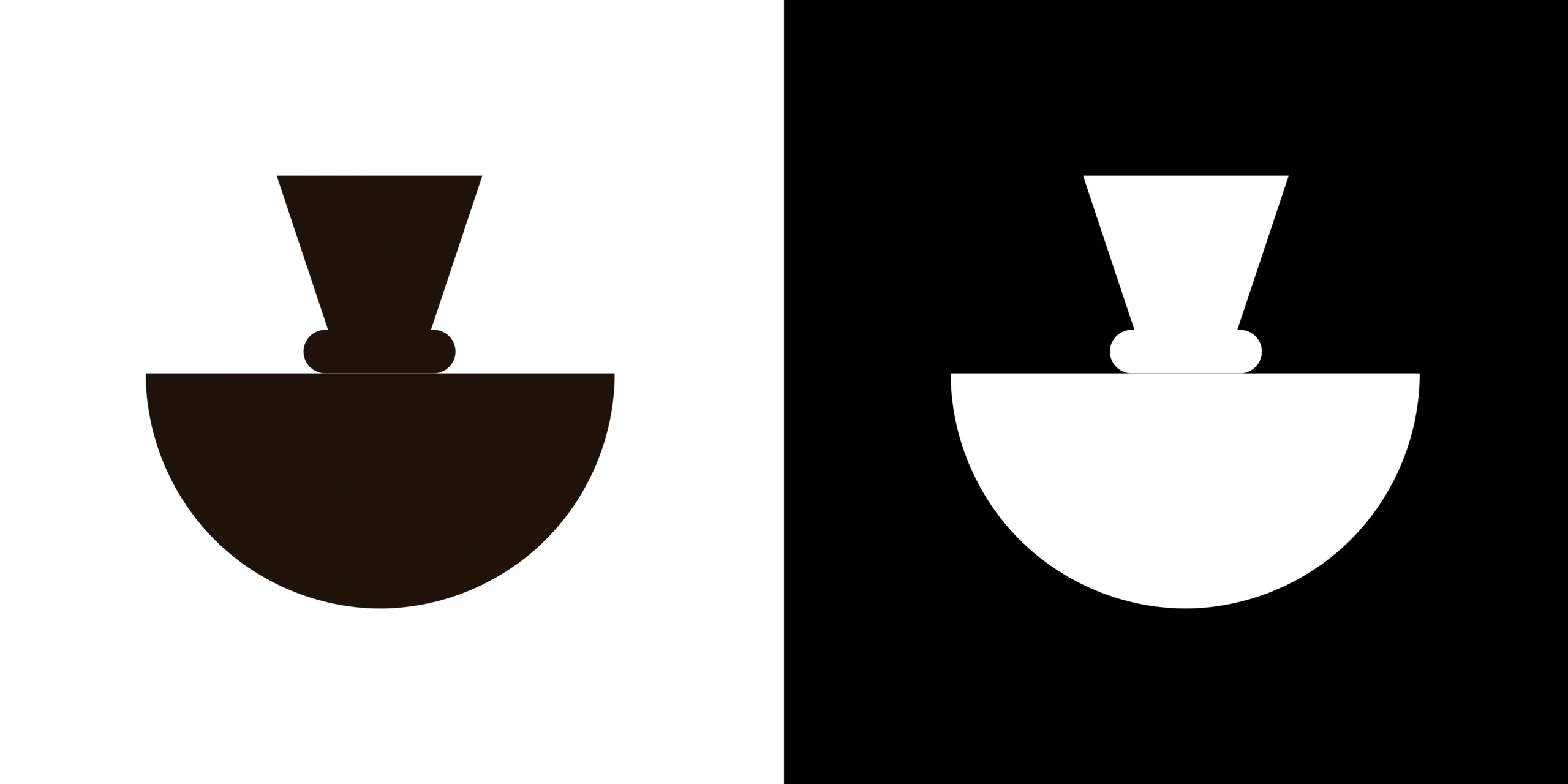
The genius of art lies in the fact that the background is not “nothing” – it is a second, equally important shape. Artists balance the relationship between these two areas.
Why is Shape so important in art?
1. It is the basis of our visual identification
The human brain identifies the surrounding world in 80% based on shapes, and only later on colors or details. Shape is the silhouette. Even if you don’t see the eyes or the smile of the Mona Lisa, you recognize the arrangement of her hands and torso. In contemporary art, the silhouette has become crucial, just look at Henry Moore’s sculptures: their curved, organic shapes are recognized as “human,” even though they lack facial features.
2. It organizes space and composition (Visual Weight)
Shapes on a canvas are not just objects – they are weights. A large, dark, compact shape attracts the eye more strongly than a small, bright, scattered one. Artists use this to build balance (or intentionally disrupt it).
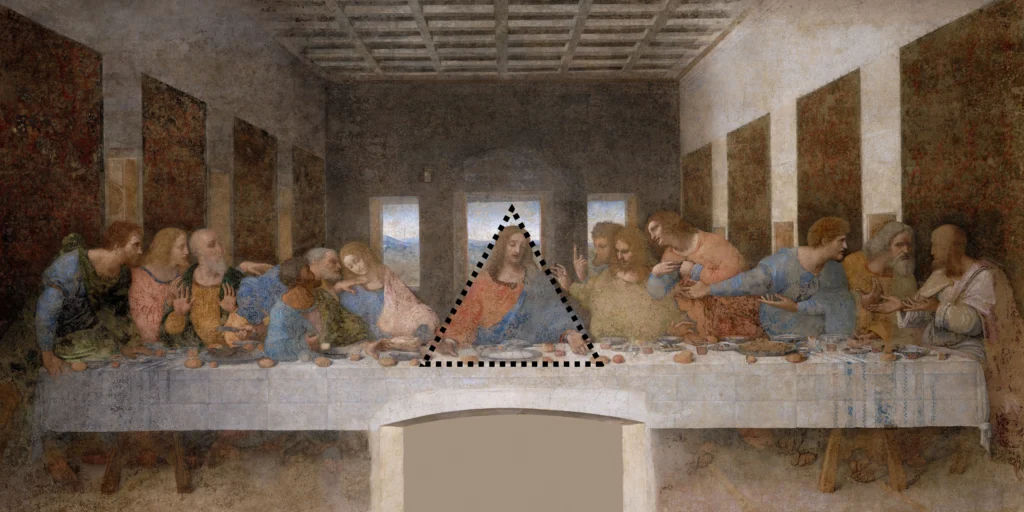
An example is the triangular composition in the Renaissance (e.g., in da Vinci’s “Last Supper”) – the pyramid shape gives the scene stability and hierarchy, directing the gaze towards the central figure of Christ. If the same figures were arranged in random, sprawling shapes, the painting would lose its solemnity.
3. It carries universal psychology and symbolism
Similar to lines, individual shapes evoke primal, archetypal reactions in us (often independent of culture):
Circle / Disc – symbolizes unity, eternity, divinity, the cycle of life. It is soft, self-contained (e.g., mandalas, rose windows in Gothic cathedrals, Kandinsky’s works).
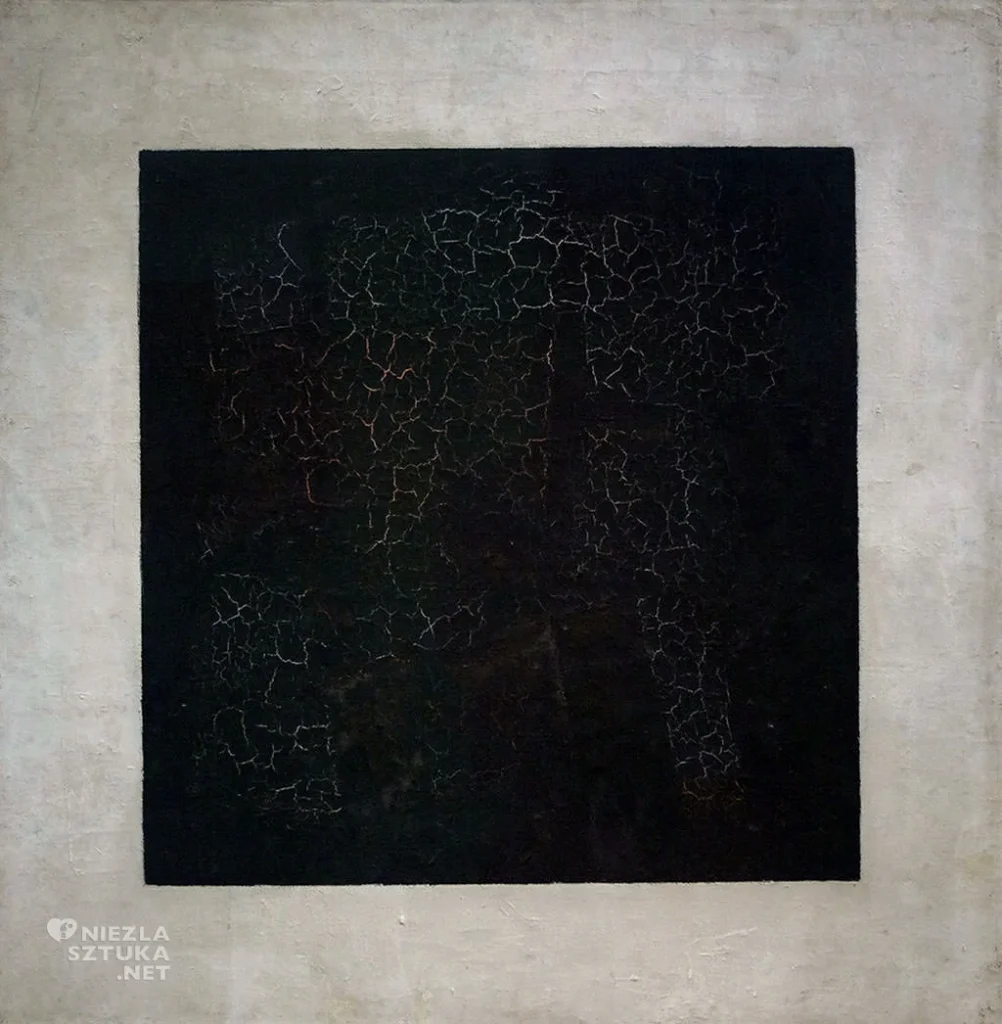
Square / Rectangle – associated with stability, rationality, earth, matter. In minimalist art (e.g., Kazimir Malevich’s “Black Square”), it is a symbol of absolute pure form, but also of monumental calm.
Triangle – dynamic, indicates direction (pointing up – aspiration, spirituality; pointing down – threat, femininity, water). In Baroque paintings, triangles build tension.
Organic Shapes (fluid, irregular) – associated with nature, the human body, emotionality, the chaos of life (e.g., Gaudí’s sculptures or Joan Miró’s paintings).
4. It creates the illusion of three-dimensionality (Form)
In classical art, transforming a flat shape (2D – an outline) into a form (3D – a solid mass) using chiaroscuro (value) was crucial. A shape outlined by a line becomes “real” only when the artist fills it with an appropriate gradient of shadow.
History and Evolution of Approaches to Shape
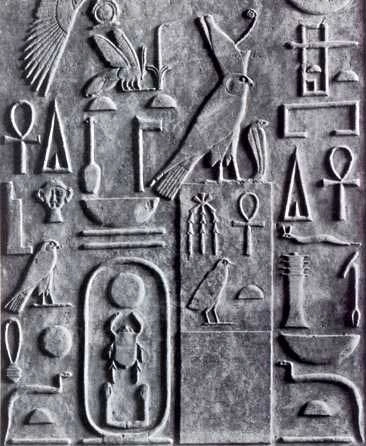
1. Antiquity: Shape as a Hieratic Symbol (Immutability)
In ancient Egyptian art, shape was not observed from nature but recreated according to strict canons (rules). The clarity of the idea mattered, not optical truth.
Human shapes were depicted in the so-called hierarchical perspective. Head and legs in profile, but torso and eye from the front. It was a flat, two-dimensional shape carved in stone, meant to last forever. Changing the *scale* of the shape (pharaoh was huge, servants small) was allowed, but not the geometry of the shape itself – because it was sacred.
2. Renaissance: Shape as a “Window to the World” (Perspective and Idealization)
Renaissance artists discovered linear perspective and anatomy. Shape ceased to be a flat sign and became a solid mass placed in a logical, mathematical space. Moreover, they sought ideal shapes (circle and square as symbols of divine harmony).
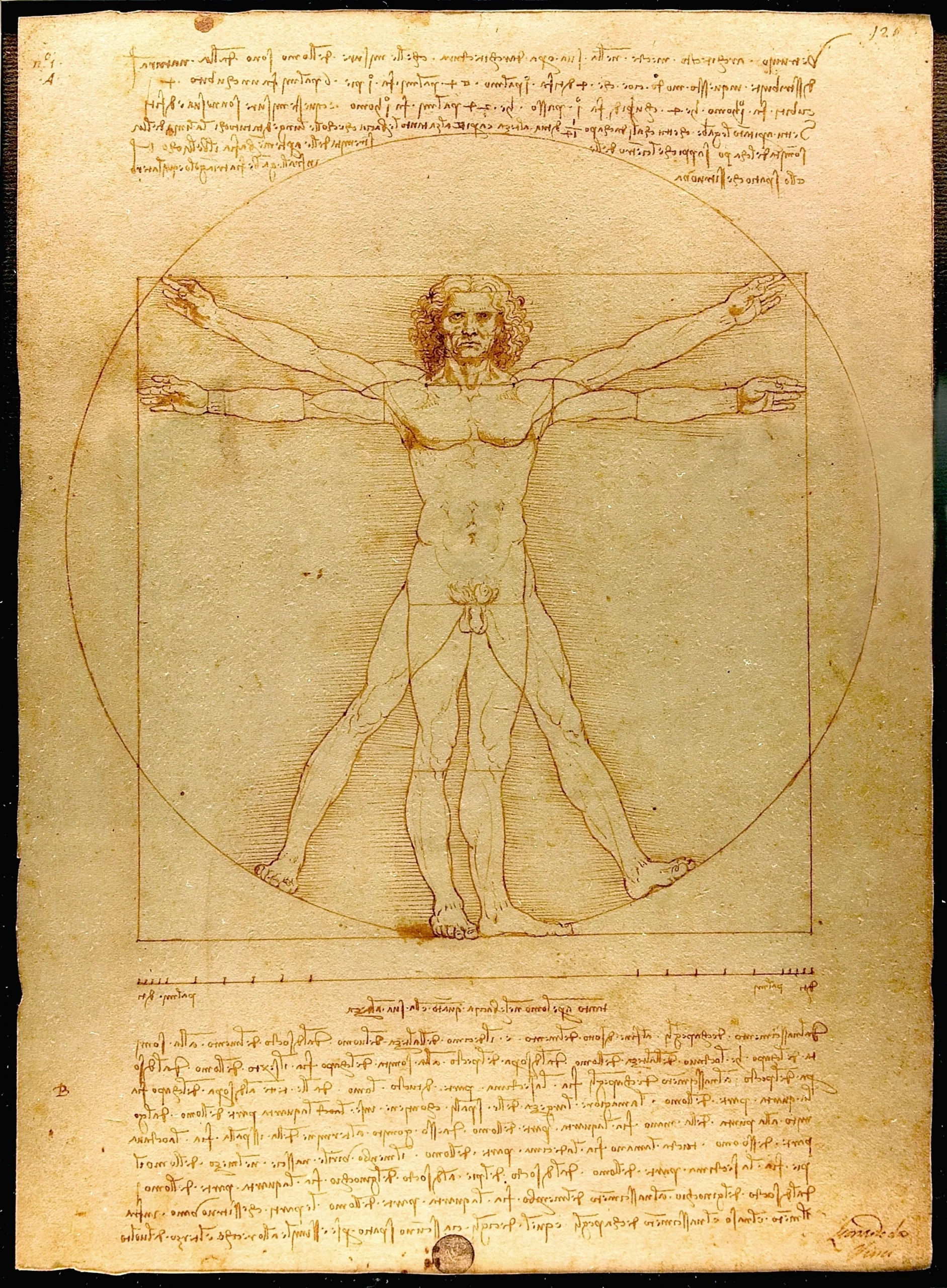
Leonardo da Vinci – “Vitruvian Man,” c. 1490
This is not just a drawing of a man. Leonardo inscribes the shape of the human body (with outstretched arms and legs) simultaneously into a circle (symbol of divinity, the universe) and a square (symbol of earth, materiality). The shape of the human body is studied here mathematically, as the measure of all things.
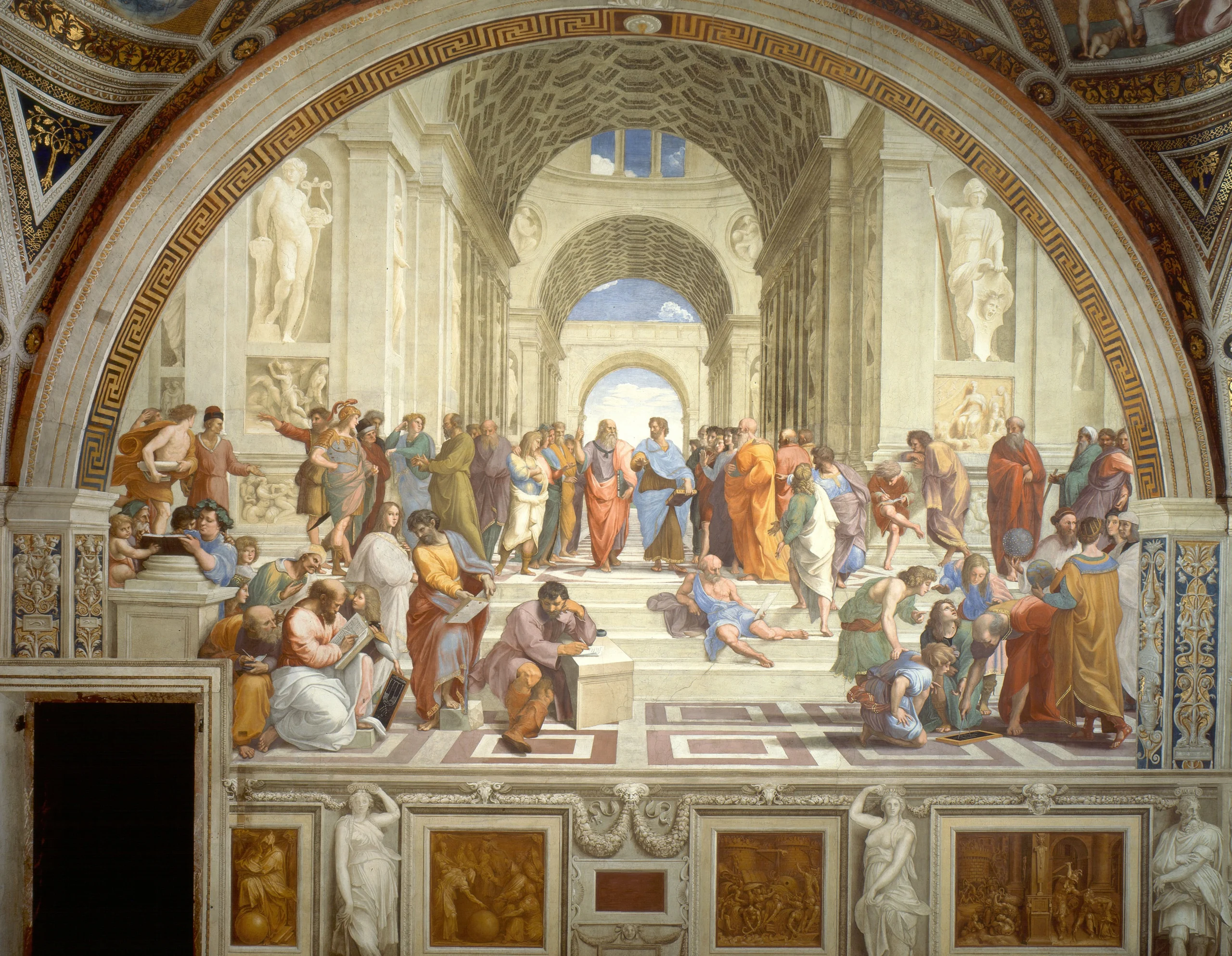
Raphael – “The School of Athens,” 1511
The entire fresco is built on a clear, monumental semicircle (architectural arch) and triangles (groups of philosophers). The shapes of architecture organize the chaos of figures – giving intellectual conversation majesty and order.
3. Mannerism and Baroque: Shape as Expression and Dynamism (Distortion)
In the Baroque period, artists began to break Renaissance ideals. Shapes became elongated, wavy, extending beyond the frame of the picture. The goal was not calm, but emotional tension.
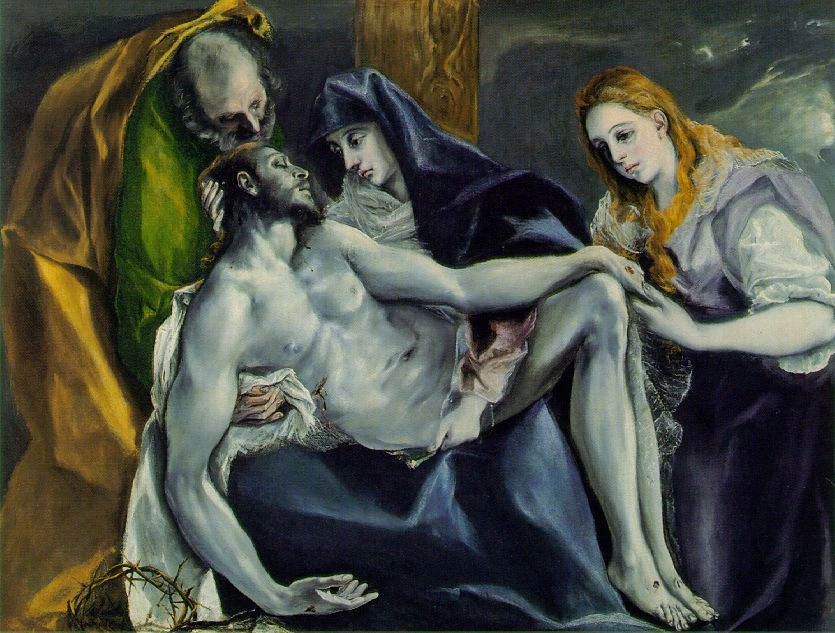
El Greco – “Pietà,” c. 1580
El Greco deliberately deforms human shapes – bodies are unnaturally elongated, flexible like flames. Christ’s shape resembles a soft, winding letter “S” (the so-called *figura serpentinata*). This is a break from naturalism in favor of spiritual ecstasy.
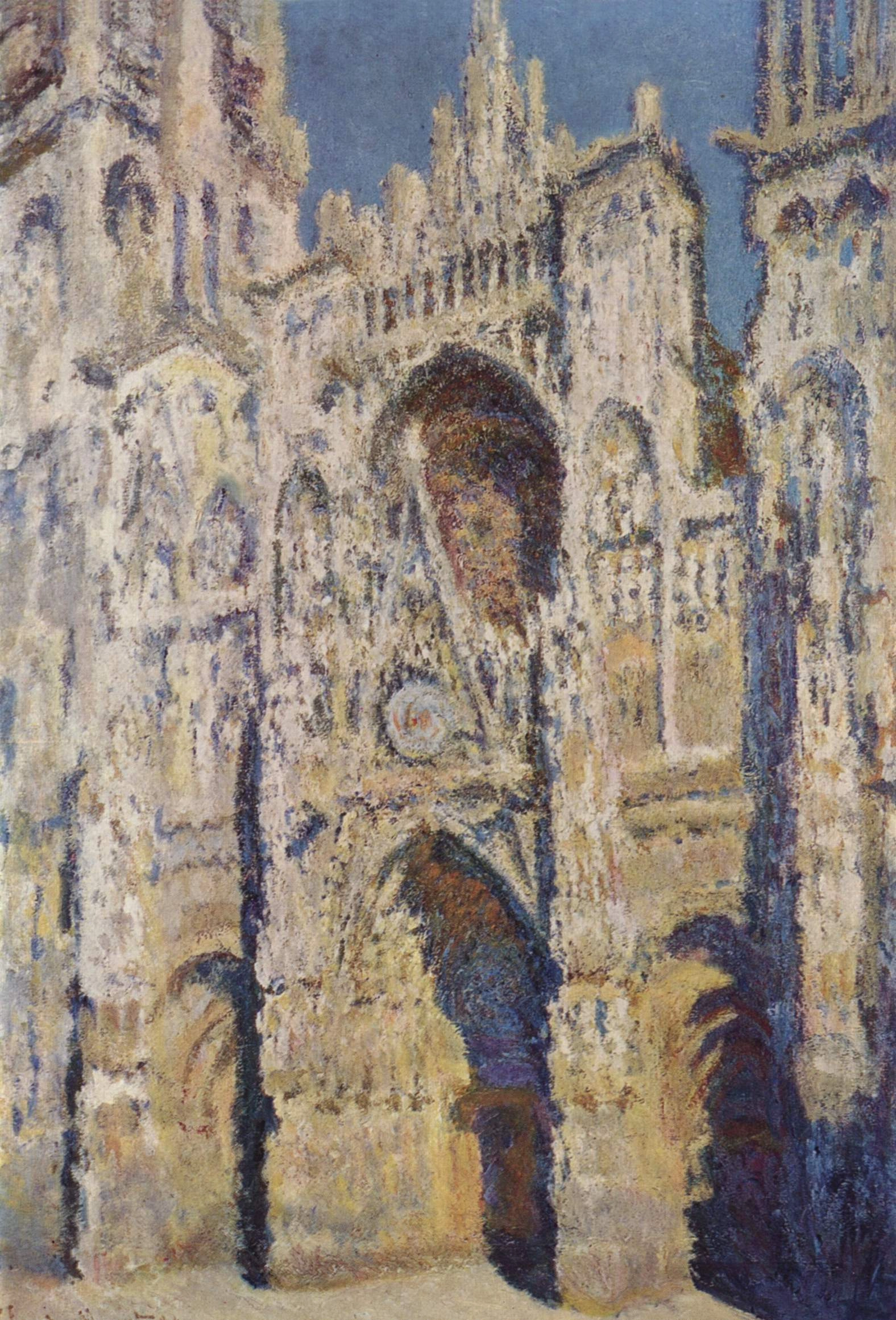
4. Impressionism: Shape Disintegrates (Light over Form)
The Impressionists argued that line and closed contours do not exist in nature – only spots of color seen in changing light exist. Shapes lose their sharp boundaries, become soft, and interpenetrate each other.
Claude Monet – “Rouen Cathedral” series, 1892–1894
If you juxtapose several paintings of the same cathedral, you will see that the very shape of the cathedral melts and disappears into mist, light, and color. The monumental stone mass dissolves into vibrating, irregular spots. Shape ceases to be permanent – it becomes a fleeting impression.
5. Cézanne’s Revolution: Shape as a Basic Solid (The Geometry of Nature)
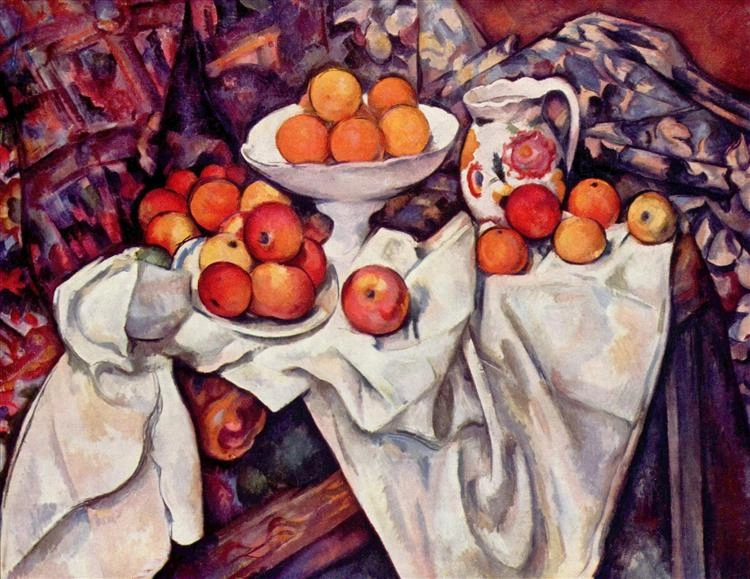
Paul Cézanne revolutionized shape, stating that all forms in nature can be reduced to the sphere, the cone, and the cylinder. This was the moment when shape detached from details and began to be analyzed structurally.
Paul Cézanne – “Still Life with Apples and Oranges,” c. 1899
Look at the apples – they are not perfectly round, but have clearly defined geometric masses. The table is tilted, the pitcher has disturbed symmetry. Cézanne deliberately ignores perspective to show the “true” shape of the object as seen from several points at once. These apples – reduced to heavy, compact spheres – would become the mother of Cubism.
6. Cubism: Shape Deconstructed (Seen from All Sides)
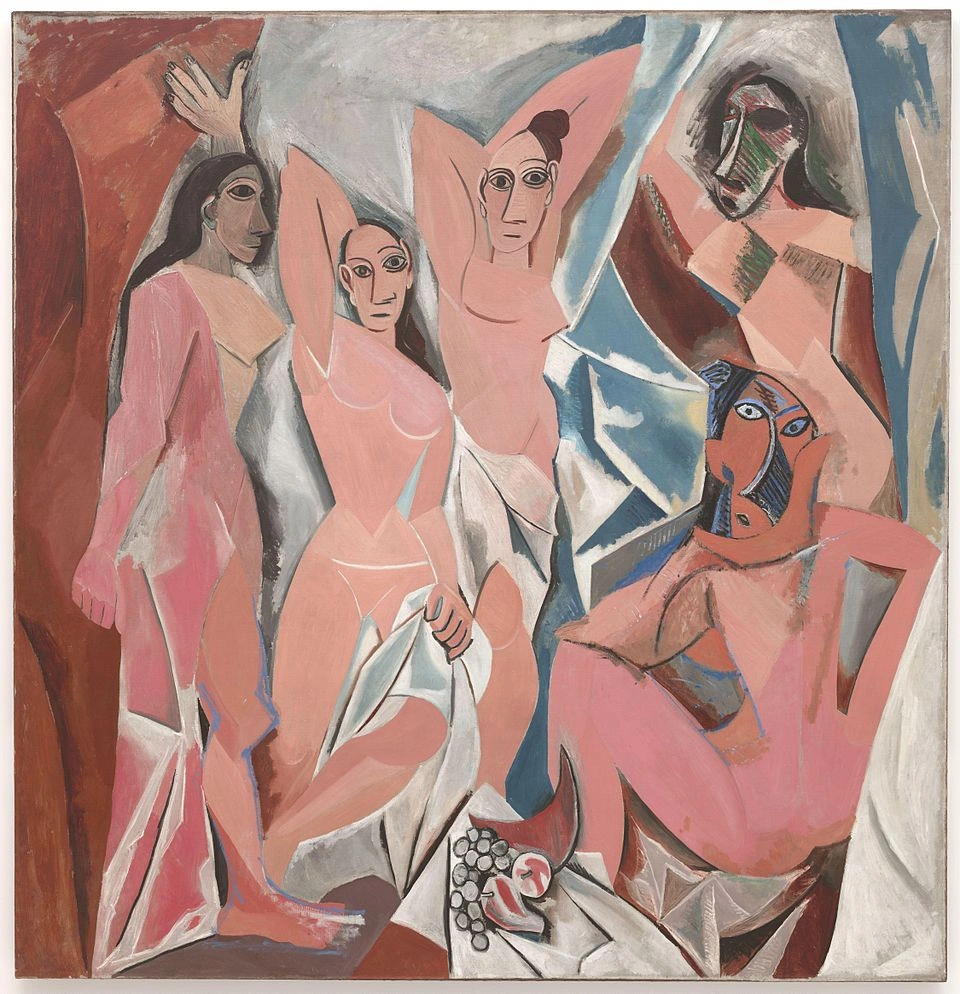
The Cubists went a step further – they broke down shape into small, polygonal planes and rearranged them, showing the object from the front, side, and top simultaneously.
Pablo Picasso – “Les Demoiselles d’Avignon,” 1907
Here, the shapes of the female bodies are aggressively broken into sharp triangles and rhombuses. The faces resemble African masks – they are flattened, brutally simplified. Shape ceases to have anything to do with anatomical beauty; it becomes an intellectual puzzle forcing the viewer to think about structure.
7. Geometric Abstraction: Shape as an Independent Ideology (Pure Form)
This is the culmination point: shape is completely cleansed of representing nature. There is no tree or man next to it – there is only itself, often as a symbol of cosmic or spiritual order.
Kazimierz Malewicz – “Black Square,” 1915
This is the most famous shape in modern art. It is a black, slightly irregular square on a white background. Malevich considered it the zero shape – “a desert where nothing exists, but where everything begins.” In one moment, shape ceased to be something and became the idea of the absolute.
8. Surrealism and Biomorphism: Shape as Subconsciousness (Fluid Nature)
In reaction to geometric rigidity, others moved towards organic, irregular shapes inspired by cells, protozoa, and dreams.
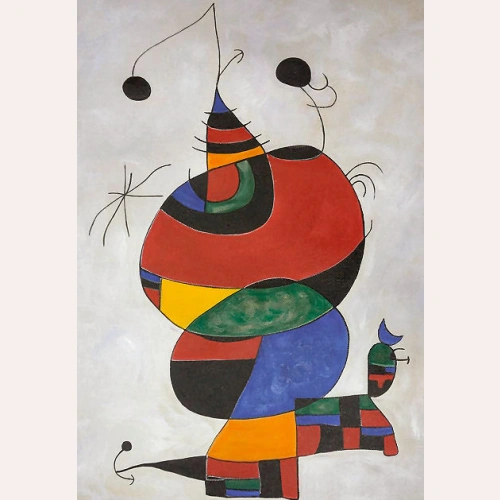
Example (Joan Miró – “Woman, Bird, Star,” 1940s)
Instead of squares and circles, Miró paints amoeba-like, spreading, soft shapes. These are simplified forms that balance on the borderline between abstraction and figuration – they look like organisms from another planet, grown from the subconscious.
9. Minimalism and Contemporary Art: Shape as a Physical Object (Real Space)
Contemporary artists have taken shape out of the picture frame and into the gallery. Shape has become a physical, three-dimensional object that we view by walking around it.
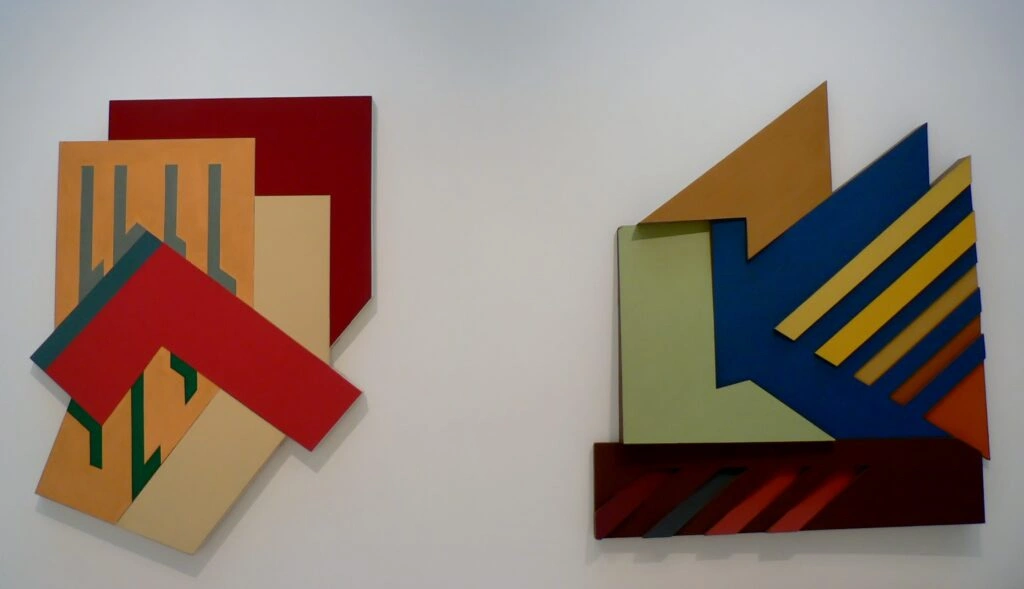
Example (Frank Stella – “L” or “T” shaped paintings, 1960s)
Stella created canvases that were not rectangles. The framing itself of the painting had the shape of an L or a zigzag. In doing so, he proved that shape does not have to be only on the canvas – the canvas itself can be the shape.
Exercises to Practice and Understand Shape
Negative Space Drawing (Drawing Negative Space):
- Take an object with a distinct shape (e.g., a chair, scissors, a flowerpot).
- Instead of drawing the object itself (positive space), focus on drawing the shapes of the empty space around it.
- Meaning: fill in the background and leave the area of the object blank. This exercise will help you realize how important shape is.
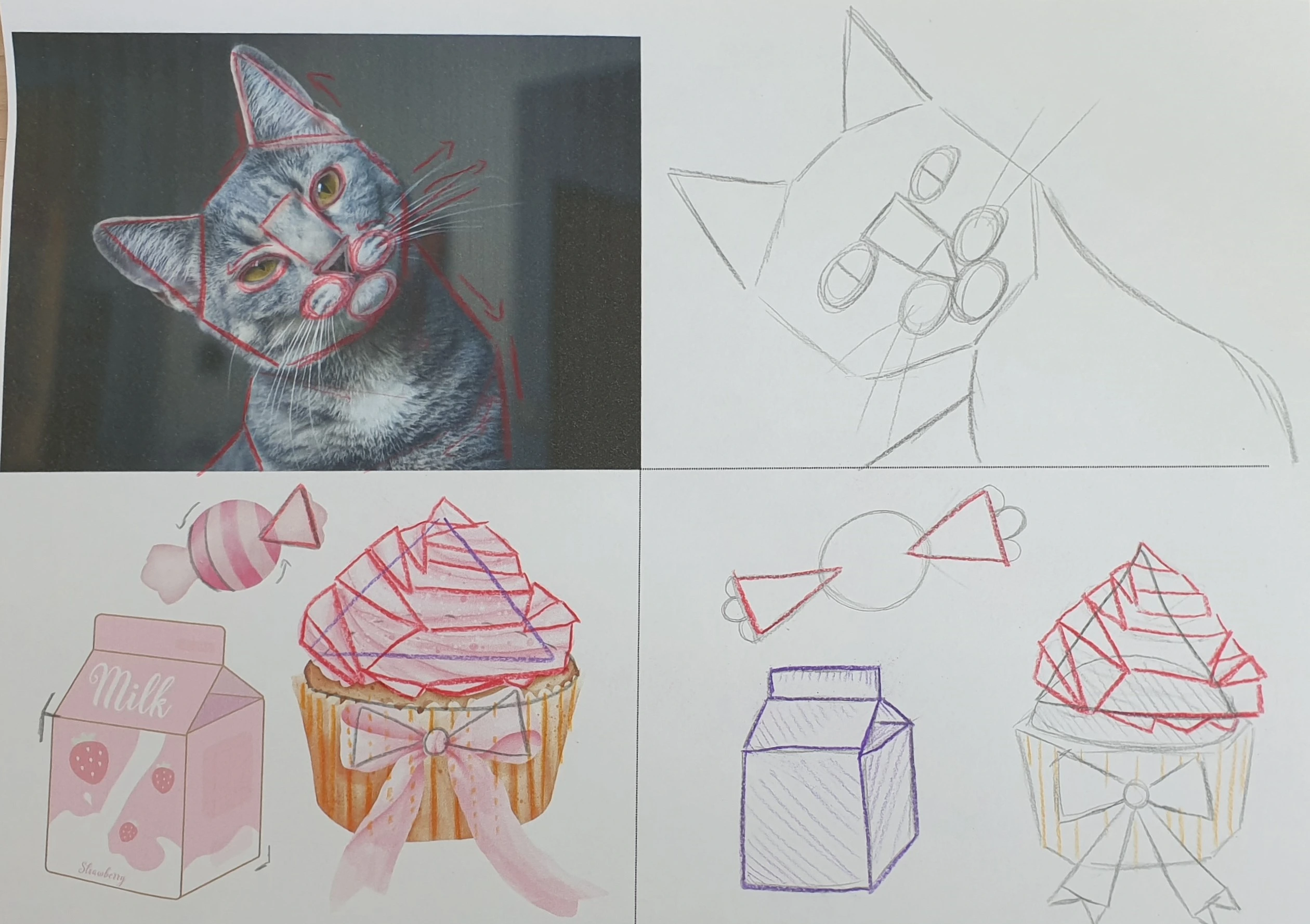
Simplifying to Geometric Form (Silhouette):
- Find a photo of an animal or a person in a distinct pose.
- Try to draw its overall form, reducing it to the simplest possible silhouette shape.
- E.g., eyes can be circles, the torso can be represented by a triangle.
- This is an exercise to help understand shape, anatomy, and the overall relationship of space in your work.
PDF Download
Fun Facts
Our brain “fills in” shapes that aren’t there (Pareidolia and the Face Effect)
The human brain has a specialized area (the fusiform gyrus) that exclusively recognizes the shape of faces.
It is so sensitive that it sees them even in electrical outlets, clouds, or on the surface of Mars.
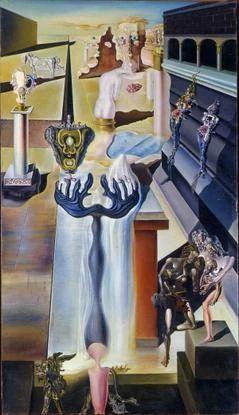
Surrealist artists, like Salvador Dalí, consciously used this. In his painting “The Invisible Man,” Dalí creates a landscape shape that, from afar, is simultaneously a man’s face – just shift your focus point, and the shape of the rock turns into a nose, and the tree into a beard.
The Round Painting (Tondo) Drives Artists Crazy
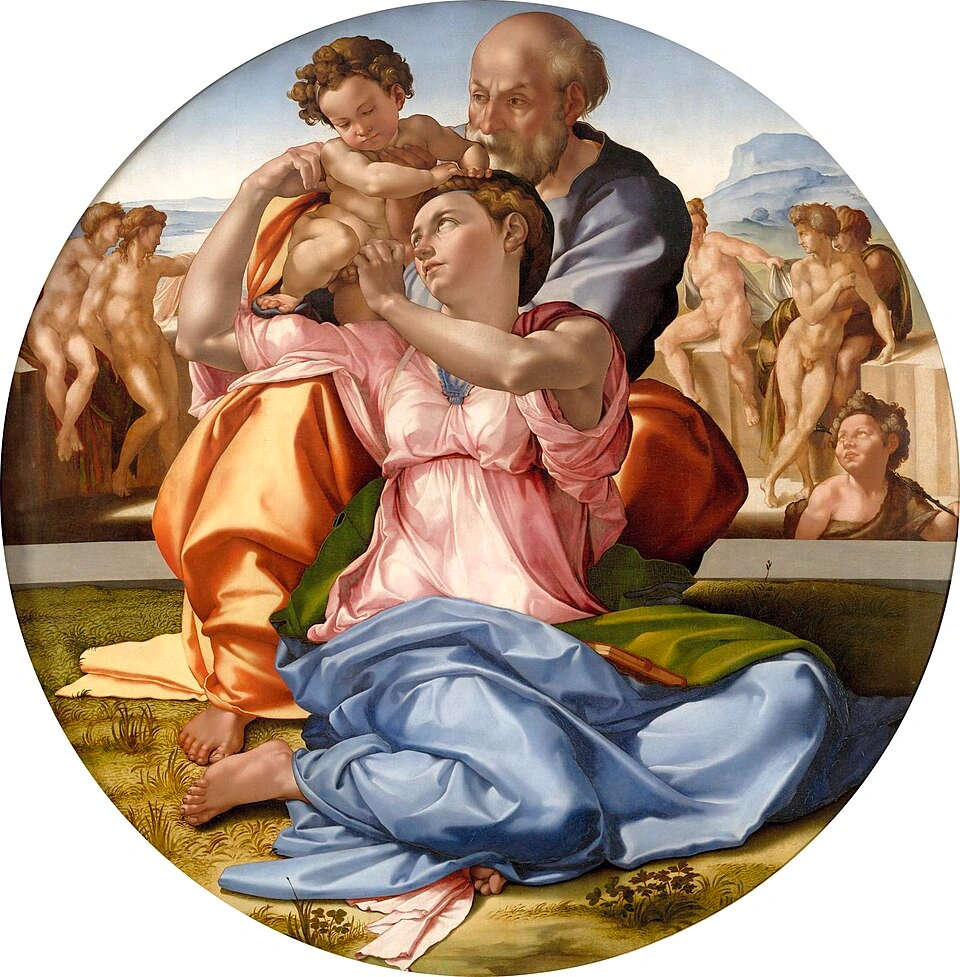
In the Renaissance, tondi, or paintings on round panels or canvases, were exceptionally fashionable. For an artist,
this is a nightmare – it’s easy to build a stable composition in a rectangle, but in a circle, there is no “top” or “bottom” in the traditional sense.
Michelangelo, painting the Doni Tondo, had to devise a swirling arrangement of shapes – he arranged the figures in a spiral that constantly revolves around the central point, instead of standing still. Today we know that the circular shape subconsciously associates us with movement and eternity, making it ideal for religious subjects (God as the eternal circle).
The Shape of the “Hole” and the “Cut” Revolutionized the 20th Century
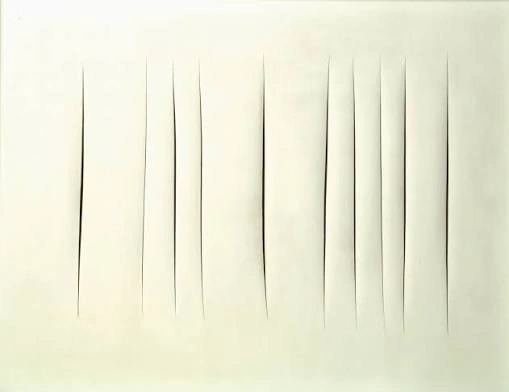
In 1958, Italian artist Lucio Fontana took a craft knife and… slashed the canvas. The resulting series,
“Concetto Spaziale” (Spatial Concept), consists of canvases with one or more cut lines.
Fun Fact: Fontana claimed to be creating a new dimension – shape ceased to be a surface and became a hole in reality.
This cut made the space behind the painting (the gallery wall) an integral part of the work.
Shape was no longer painted – it was cut out.
The Golden Number (1.618) Governed Shapes in Architecture and Paintings
The rectangle with proportions 1:1.618 (the golden rectangle) is considered the most pleasing to the eye.
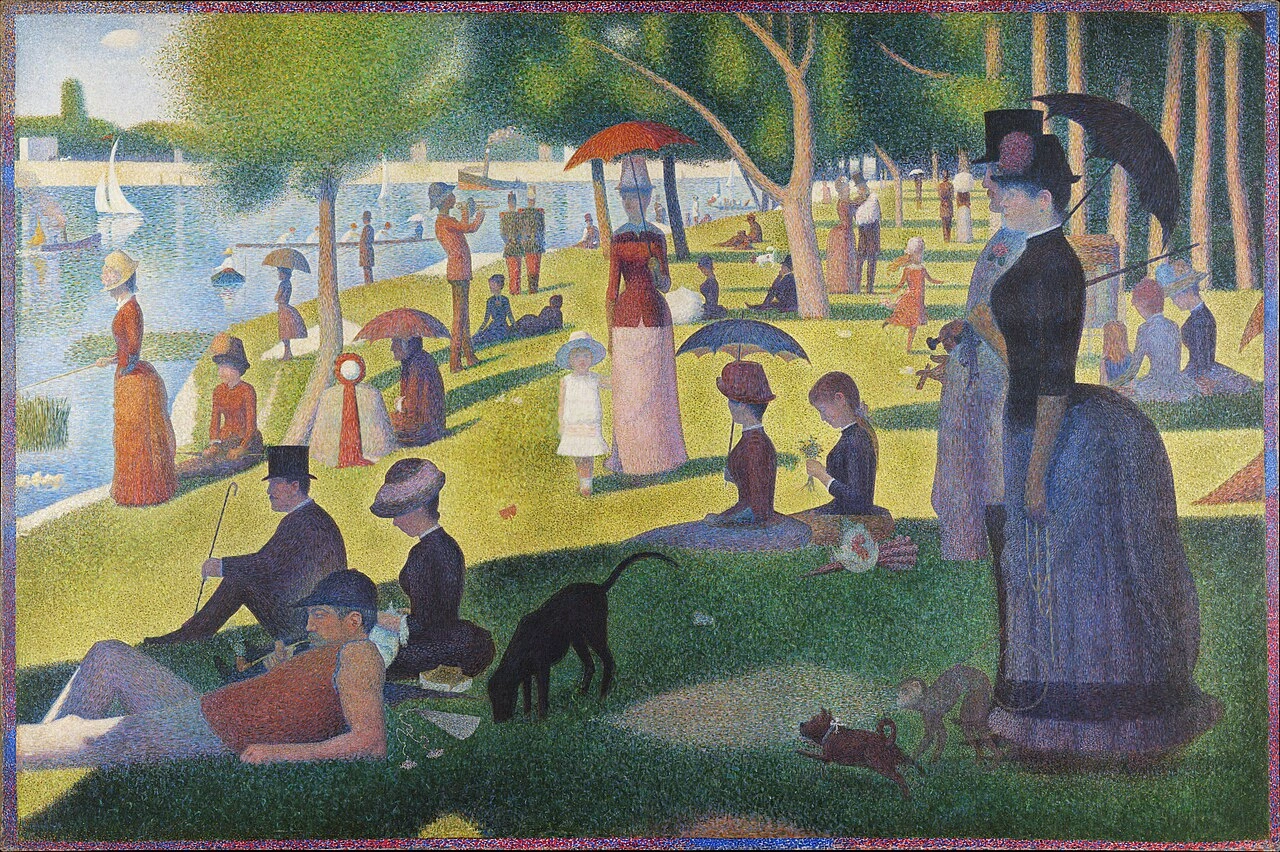
But did you know that Georges Seurat (the creator of Pointillism) intentionally used these proportions in his masterpiece
“A Sunday Afternoon on the Island of La Grande Jatte”?
Analyzing the arrangement of figures, the horizon, and the trees, everything is inscribed in golden rectangles and spirals.
Seurat believed that such mathematical shapes would lead the viewer into a state of religious calm and harmony.
When a Shape Causes Physical Pain (Cognitive Dissonance)
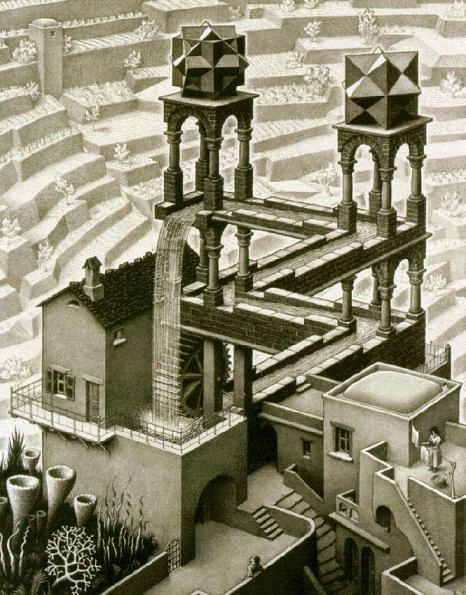
Artists deliberately use so-called “impossible shapes” to unsettle the viewer. The most famous example is the Penrose Triangle
the one that looks like it exists in 3D but cannot be built. Fun Fact: Dutch graphic artist M.C. Escher built his entire career on such shapes.
In the print “Belvedere”, we see a gallery whose pillars touch the base at the bottom but are suddenly positioned in front of the roof at the top. Our brain tries to force these shapes into a logical solid and gets a “system error.” This proves that shape has the power to evoke physical discomfort (disgust) or awe in the viewer.
Negative Space in Logos and Art – the Shape that Disappeared
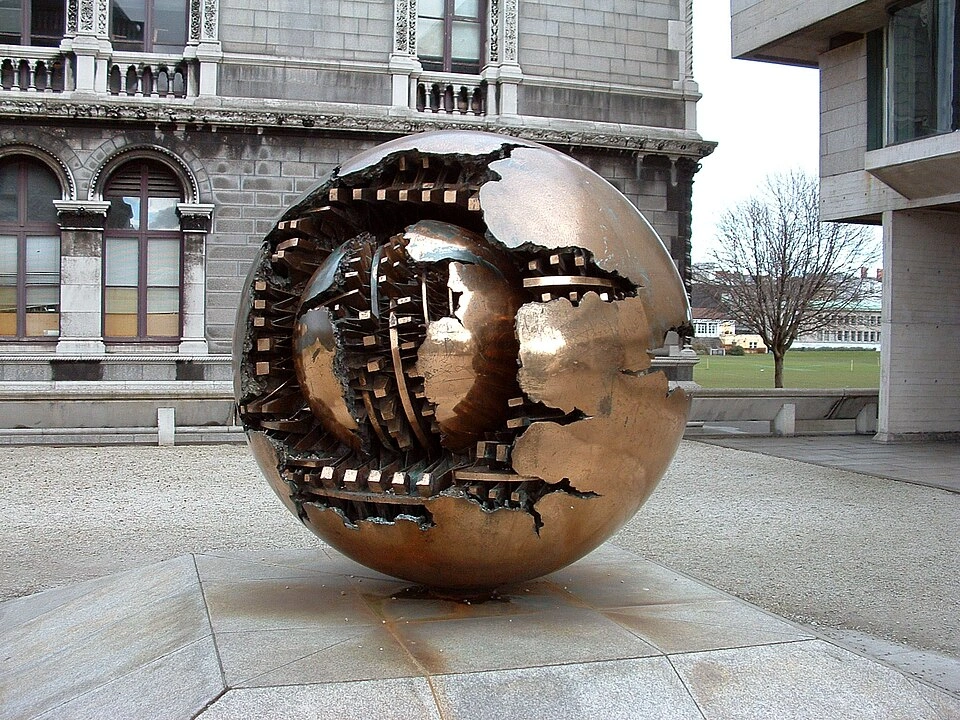
In shape psychology, there is the principle of amodal completion – we guess the whole even when we only see a fragment.
In the famous sculpture “Sphere” by Arnaldo Pomodoro (adorned in many cities), the outer side is a perfect sphere,
but a crack reveals a jagged, archaic shape inside.
Fun Fact
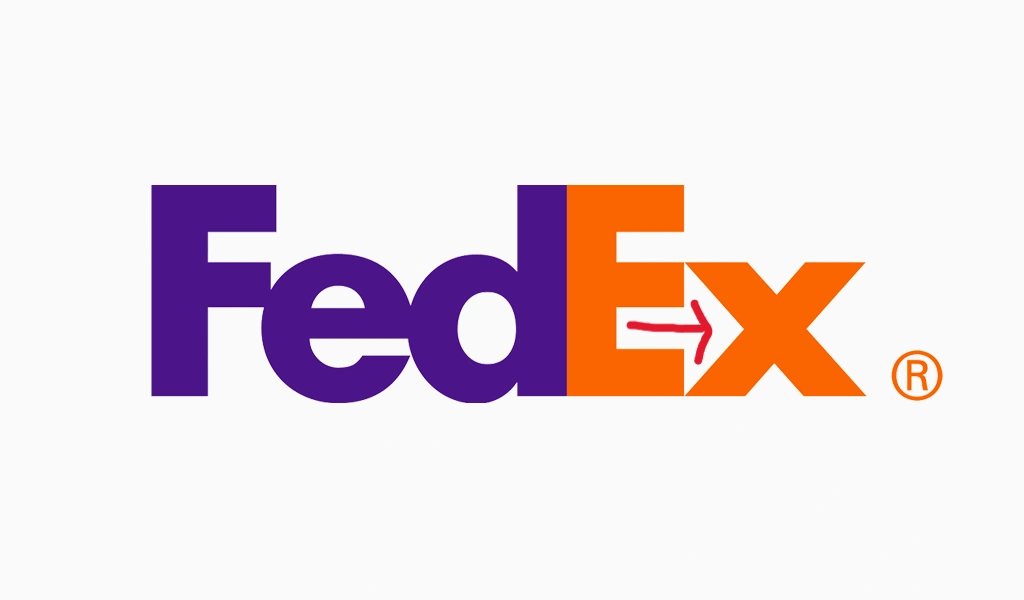
Logo designers (e.g., FedEx) love to hide shapes in negative space – in the FedEx logo, an arrow is hidden between the letters E and x (symbolizing fast transport). Once revealed, this shape becomes impossible to “unsee.”
Shapes Affect Our Emotions Faster Than Color
Neuroaesthetic studies have shown that the brain recognizes a shape and assigns an emotion to it in just 50 milliseconds
(faster than conscious thought). Sharp, angular shapes (e.g., in Expressionist paintings) activate our amygdala, the fear center,
causing a slight increase in blood pressure. In contrast, soft, rounded shapes (like in Henry Moore’s sculptures) lower heart rate.
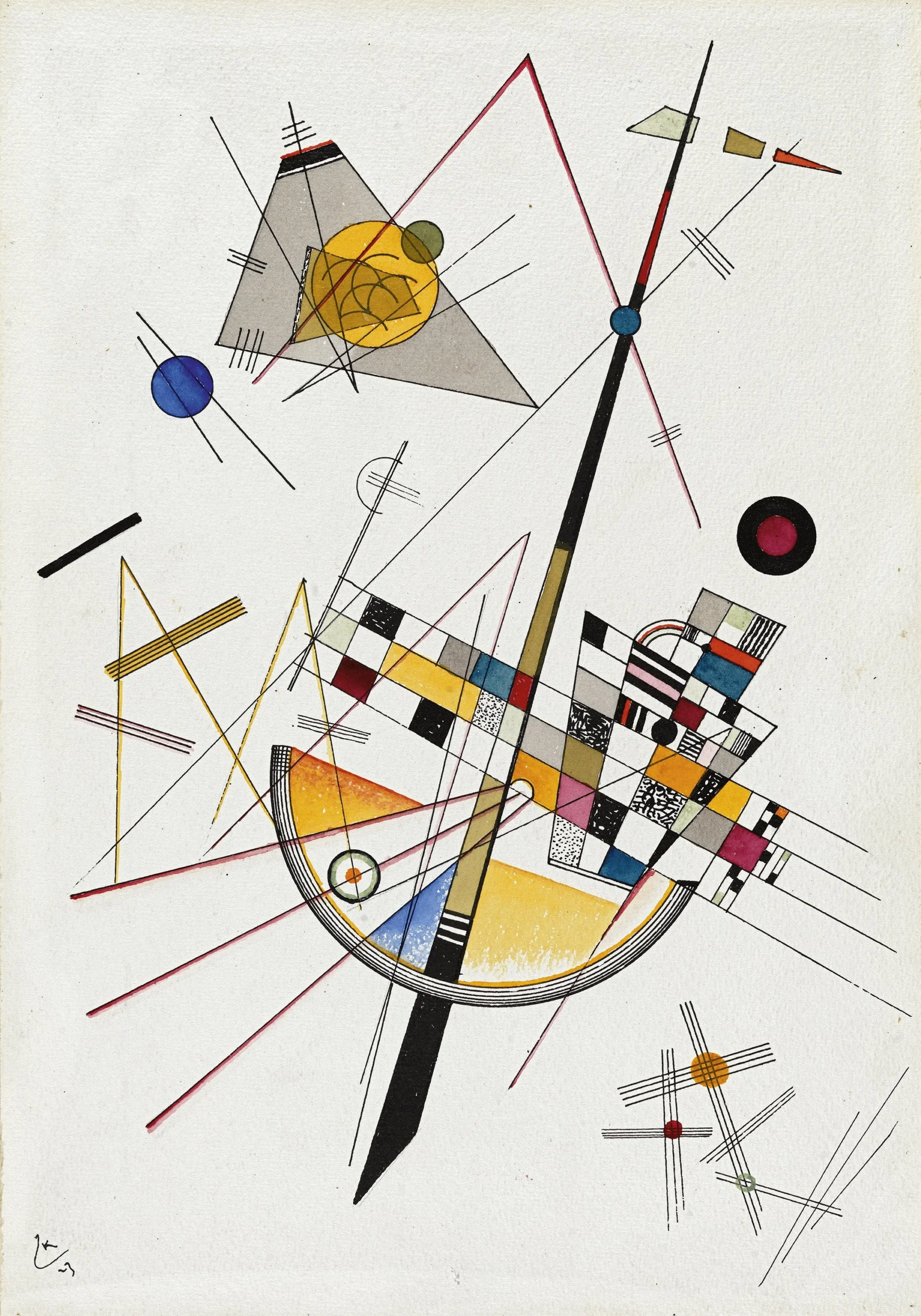
This is where the phenomenon of Kandinsky comes from, who saw specific sounds in his geometric shapes
the circle for him was a “gentle, deep tone,” and the triangle an “aggressive, sharp trumpet blast.”
The Most Surprising Fact to End
For thousands of years, artists believed that line and color were the most important, and shape was merely their resultant.
However, in the 1960s, psychologists proved that if you showed an average person an image for 1/100th of a second,
they would remember only the general outline (shape), not the specific color or texture.
This means that shape is the visual DNA of art – it decides the first, subconscious impression,
before we even have time to think: “What painting is this?”
Summary
The 7 Elements of Art are not just some dry theory, but a true foundation that influences our craft and the quality of our artworks.
Shape has traveled a long way through history, acquiring new meanings, values, and modes of expression.